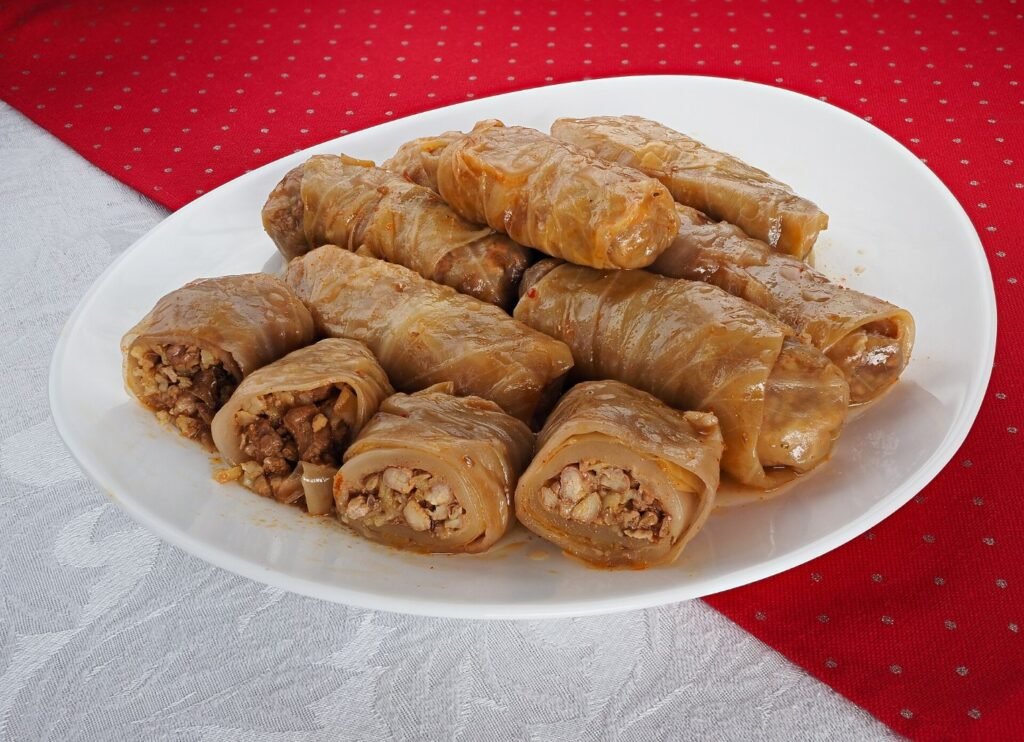
The first Bulgarian dish that made me think we have this at home was sarmi: vine or cabbage leaves rolled around rice, often with minced meat. In Egypt the same idea goes by mahshi, a word we also use for stuffed peppers, courgettes and aubergines.
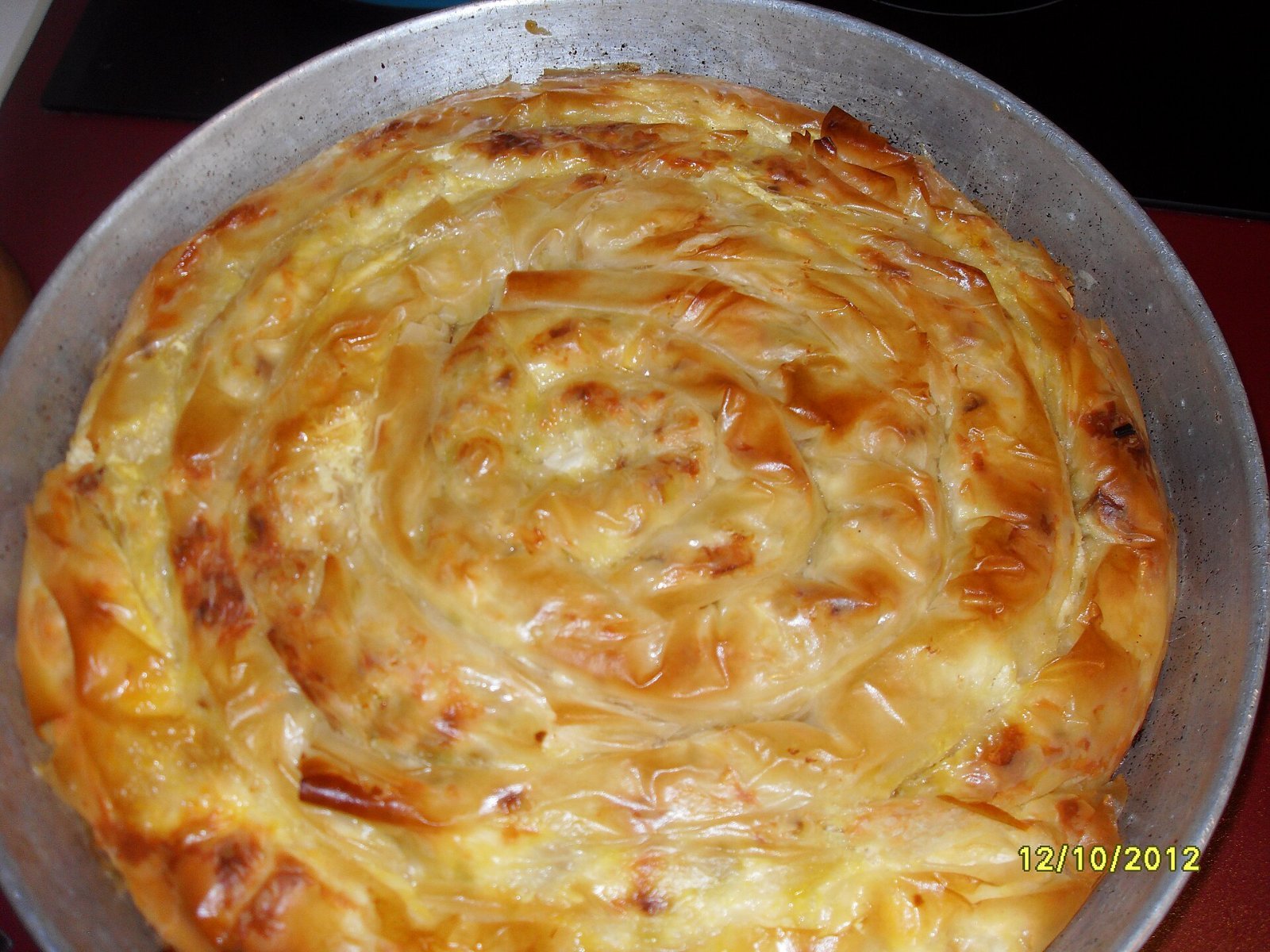
Banitsa came next: thin layers of pastry with white cheese and butter, baked until golden. It is a close relative of Egyptian feteer. Bulgarians eat it at breakfast, and on New Year’s Eve they bake small lucky charms into it, so that each slice comes with a fortune for the year ahead.
Words that took the same road
Bulgarian and Egyptian Arabic share more vocabulary than I expected. The word I hear most is mashallah, машала in Bulgarian. In Egypt we say it when we admire something, partly to keep envy away. That habit belongs to a wider set of beliefs about envy, luck and the evil eye, and those, too, are strikingly similar in Bulgaria.
Many everyday words match as well. Both languages absorbed them through centuries of contact with Turkish, and several came from Arabic in the first place.
| Bulgarian | Egyptian Arabic | Meaning |
|---|---|---|
| машала (mashala) | mashallah | an expression of praise or admiration |
| тамам (tamam) | tamam | exactly, just right |
| чанта (chanta) | shanta | bag |
| чорба (chorba) | shorba | soup |
| джоб (dzhob) | geib | |
| сапун (sapun) | sabun | soap |
| кибрит (kibrit) | kabreet | matches |
| кюфте (kyufte) | kofta | meatballs |
| халва (halva) | halawa | halva |
| бакшиш (bakshish) | baksheesh | a tip |
A mother-in-law who thinks I’m too thin
Hospitality works the way I know it. My mother-in-law is convinced I never eat enough. Whenever she sees me she decides I need feeding, and when I visit she makes sure I eat more than anyone else at the table. In her eyes I am permanently underfed. Any Egyptian will recognise her.
Why so close?
Much of the answer is history. Bulgaria was part of the Ottoman Empire from the late fourteenth century until 1878, and Egypt came under Ottoman rule in 1517. For centuries, dishes, words and habits moved along the same routes, and both countries still carry the traces.
Where the likeness ends
Not everything carries over. For me the clearest difference is friendship. In Egypt it is easy to make friends and to become close to people quickly. In Bulgaria you can make friends too, don’t get me wrong, but in the same amount of time those friendships don’t run as deep as the ones I would make in Egypt.
I’m not sure whether that is simply how friendship works here, or whether I am still learning how it works.
Sources and credits
- Banitsa lucky charms: Bulgarian National Radio
- Shared vocabulary: “Turkish Borrowings in Bulgarian Lexis”
- Ottoman Bulgaria: Britannica, “Turkish yoke”
- Ottoman Egypt: “The Ottoman Conquest of Egypt (1517)”, International Journal of Middle East Studies
- Banitsa photo: Sheku80, CC BY-SA 3.0, via Wikimedia Commons
- Sarma photo: Petar Milošević, CC BY-SA 4.0, via Wikimedia Commons